Types of SASSA Grants in South Africa
Life in South Africa isn’t easy for everyone. Many households rely on government support to survive. That’s why so many types of SASSA grants, NGO’s and support programs exist—to protect vulnerable groups and ensure that basic needs are met. These grants are not luxuries; they are survival tools for children, the elderly, and those living with disabilities.
So, what grants are available from SASSA, how do they work, and who qualifies? Let’s explore them step by step.
What are Social Grants?
Social grants are monthly cash payments provided by the South African government through SASSA to help citizens who cannot support themselves financially. Think of them as a safety net, they are designed to reduce poverty and ensure that basic needs like food, clothing, and shelter are met.
These grants are not handouts. They’re constitutional rights. The South African Constitution guarantees every citizen access to social security, including social assistance for those who cannot support themselves. The government recognizes that not everyone has equal opportunities to earn income, whether due to age, disability, or caring responsibilities.
Here is what’s important to understand: social grants serve multiple purposes beyond just providing money. They help stimulate the economy when beneficiaries spend their grants in local communities. They also enable caregivers to stay home with children or elderly family members instead of working multiple low-paying jobs.
Different Types of SASSA Grants Explained
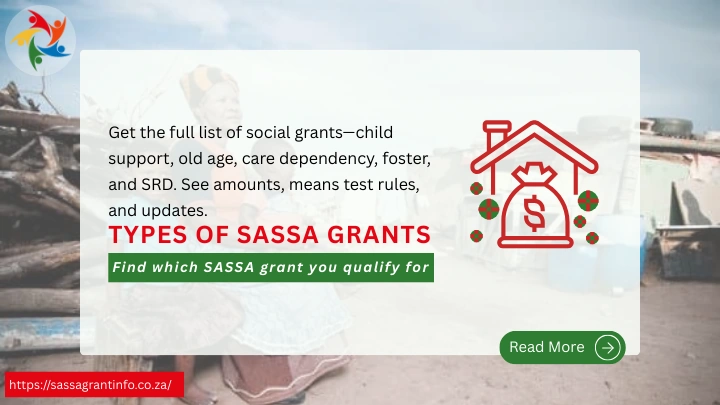
There are 9 core types of social grants in South Africa. Each serves a specific group of people:
- Child Support Grant
- Child Support Grant Top-Up
- Foster Child Grant
- Care Dependency Grant
- Older Person’s Grant
- Disability Grant
- War Veterans Grant
- Grant-in-Aid Benefits
- Social Relief of Distress Grant (including COVID-19 SRD)
Child Support Grant
This grant helps households struggling with the costs of raising children. You qualify if you are the child’s primary caregiver (not always the biological parent, mind you!), under 18 years old, and living in South Africa. You can apply for more than one child, but not if you’re looking after a small army of little ones who aren’t yours by birth or adoption.
The grant focuses on the child’s needs rather than the caregiver’s employment status. Even if you’re working, you might still qualify if your combined household income falls below the means test threshold.
Child Support Grant Top-Up
Available when both parents are deceased, and the child is in the care of relatives. Provides extra financial support on top of the standard child support grant.
Foster Child Grant
This grant supports people who have legally fostered children through the court system. This grant is higher than the Child Support Grant because foster parents often take on children with additional needs or from difficult circumstances.
You must have a court order placing the child in your care to qualify. The grant helps cover costs like specialized medical care, therapy, or educational support that foster children might need. Importantly, foster parents are not subject to the means test when applying for this grant.
Care Dependency Grant
The Care Dependency Grant supports children under 18 with severe disabilities who need full-time care. This grant recognizes the significant costs and lost income associated with caring for a severely disabled child.
The child must need permanent care or support services due to their disability. Medical professionals must confirm that the child needs full-time care that prevents the caregiver from working. For parents or primary caregivers, the means test applies which are given below in table.
Older Person’s Grant
Previously called the Old Age Pension, this grant supports South Africans aged 60 and older. The grant recognizes that older people often face employment discrimination and health challenges that make earning income difficult.
There is a higher amount for beneficiaries over 75 years old, acknowledging that very elderly people often have higher medical and care costs.
Disability Grant
The Disability Grant supports adults aged 18-59 who cannot work due to physical or mental disabilities. This grant can be temporary (for conditions expected to improve) or permanent, depending on your medical condition.
Medical assessments determine eligibility, and you’ll need comprehensive medical reports from qualified healthcare professionals. The assessment looks at how your disability affects your ability to work and support yourself.
War Veterans Grant
A shout-out to the heroes – this is for South African war veterans, aged 60+ or with disabilities, who served during the wars and meet the means test. Few qualify nowadays, but it’s about honour. It includes World War II or the Korean War heroes.
Grant-in-Aid Benefits
This grant provides additional support to people who already receive other SASSA grants but need help with daily care activities. You might qualify if you need someone to assist with tasks like bathing, dressing, or preparing meals.
The Grant-in-Aid doesn’t replace other grants – it supplements them. You can receive it alongside your primary grant to help pay for a caregiver or additional support services.
Social Relief of Distress Grant (SRD)
Temporary support for unemployed South Africans with no income. The SRD grant provides temporary relief during crises or emergencies. This grant was introduced in response to the COVID-19 pandemic to provide immediate, short-term relief to those affected by the crisis. SASSA is continuing this grant, which has been extended until March 2026.
Currently paying R370 monthly, this grant helps unemployed adults aged 18-59 who don’t receive other social grants or UIF benefits.
Where to Apply for these Grants
- Online at services.sassa.gov.za: Older Person’s Grant, Child Support Grant, and Foster Child Grant applications can be submitted on SASSA services portal.
- Nearest SASSA office: For grants requiring physical documents, such as medical assessments (Disability Grant, Care Dependency Grant, War Veterans, and Grant-in-Aid) you need to visit physically to a nearest SASSA office.
- SRD Portal (srd.sassa.gov.za): All applications for the R370 SRD grant are processed online only. SRD online application procedure is simple and fast.
Applicants must provide an ID or approved alternative, proof of residence, proof of income, and medical or court documents where applicable.
What is Means Test Criteria
The means test determines whether your household income and assets qualify you for grants. It’s basically SASSA’s way of ensuring grants reach people who need them most.
The means test examines your total household income, including salaries, pensions, rental income, and support from family members. It also considers assets like property, vehicles, and investments, though your primary residence usually doesn’t count.
Different grants have different thresholds because they serve different purposes and populations. For example, the Child Support Grant has higher income thresholds than adult grants because it focuses on the child’s needs rather than adult employment capacity.
Assets and Income Threshold for Each Grant
Here are the means test thresholds effective from April 1, 2025:
| Grant Type | Single Person Asset Threshold | Married Couple Asset Threshold | Single Income Limit (Annual) | Married Income Limit (Annual) |
| Older Person’s, Disability, War Veteran’s | R1,524,600 | R3,049,200 | R107,880 | R215,760 |
| Child Support Grant | N/A | N/A | R67,200 | R134,400 |
| Care Dependency Grant | N/A | N/A | R277,200 | R554,400 |
| Foster Child Grant | Not means tested | Not means tested | Not means tested | Not means tested |
| Social Relief of Distress | N/A | N/A | R624/month means tested | N/A |
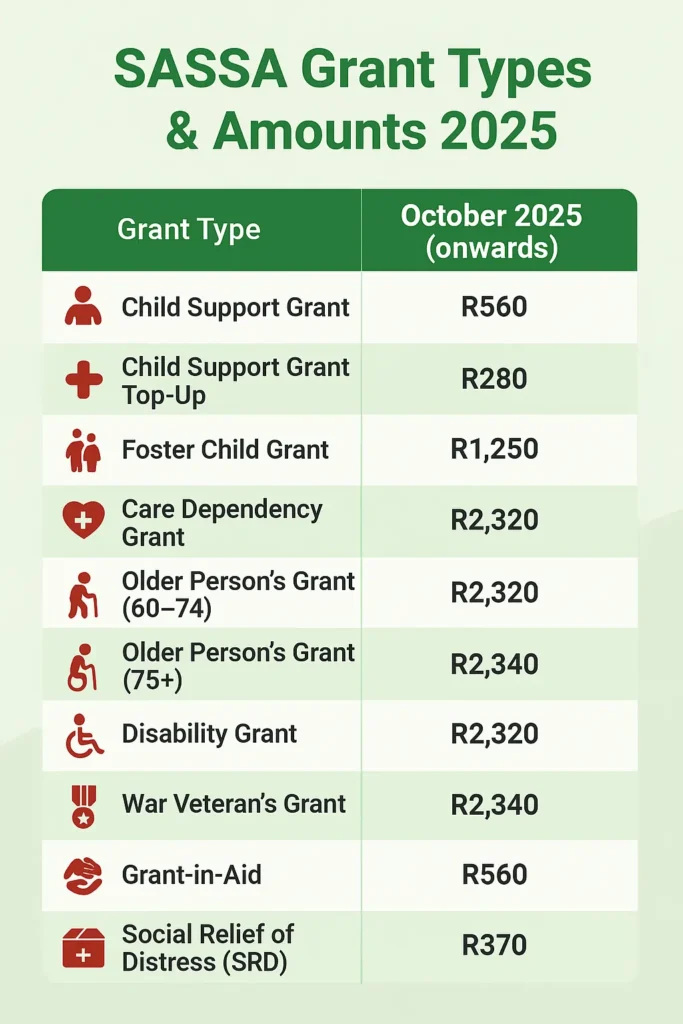
Amount of All Grants Updated October 2025
Grant amounts update normally twice a year – in April and October. Here are the current grant amounts as of April 2025 and October 2025:
| Grant Type | April 2025 | October 2025 & onwards |
| Child Support Grant | R560 | R560 |
| Child Support Grant Top-Up | R280 | R280 |
| Foster Child Grant | R1,250 | R1,250 |
| Care Dependency Grant | R2,310 | R2,320 |
| Older Person’s (60-74) | R2,310 | R2,320 |
| Older Person’s (75+) | R2,330 | R2,340 |
| Disability Grant | R2,310 | R2,320 |
| War Veteran’s Grant | R2,330 | R2,340 |
| Grant-in-Aid | R560 | R560 |
| Social Relief of Distress | R370 | R370 |
How Grant Payments are Made Each Month
SASSA payment dates are important to make monthly budget plan for beneficiaries. SASSA follows a structured payment schedule each month, with different grant types paid on different days. This system prevents overcrowding at pay points and ensures smooth payment processing.
Typically, Older Person’s Grants are paid first, followed by Disability Grants, then Children’s Grants. The SRD grant operates differently. Remember, the SRD R370 grant does not have one single payment date for everyone. Check your own status. You must check your individual payment status online rather than following a general schedule.
Methods of Receiving Grant Amount
- SASSA Gold/Black Card – Can be used like a bank card at ATMs, retail stores, and Postbank outlets.
- Direct Bank Deposit – Funds are transferred directly into the beneficiary’s personal account.
- Cash Send / Retail Pick-up – For SRD grants and beneficiaries without bank accounts.
Rights and Responsibilities of Beneficiaries
Beneficiaries have the right to:
- Receive grants regularly and on time.
- Be treated with dignity and respect by SASSA staff.
- Appeal any declined application.
Beneficiaries must also:
- Inform SASSA of changes in financial or family circumstances.
- Avoid fraudulent claims.
- Keep their SASSA card and PIN safe.
Failure to comply may result in suspension or lapsing of the grant.
Conclusion
These types of social grants in South Africa are the backbone of the country’s fight against poverty. Whether you need support for a child, assistance due to disability, or help during your retirement years, there is likely a grant designed for your situation.If you qualify, applying could mean the difference between struggling and surviving. Social grants may not solve every problem, but they are proof that no one should be left completely behind.
Remember that grant eligibility and amounts change regularly, I’ll update this page whenever the situation changes.